Understanding HVAC System Warranties and What They Cover

What Do HVAC System Warranties Cover?
HVAC warranties include two types: manufacturer warranties covering defective parts like compressors and coils (not labor), and labor warranties from installers covering technician time. Warranties exclude routine maintenance, DIY or unlicensed installations, and external damage from storms or power surges. Keep warranties valid by registering within 60-90 days, scheduling annual maintenance, and using licensed professionals.
Replacing your home’s heating and cooling system is one of the most significant financial investments you’ll make as a homeowner. When you purchase a new unit, you expect it to keep your family comfortable for years to come. However, even the highest quality equipment can experience mechanical issues. This is where understanding HVAC system warranties and what they cover becomes essential for protecting your wallet.
A warranty serves as a manufacturer’s promise to stand behind their product, but the fine print can be confusing. Many homeowners assume they’re fully protected from all repair costs, only to receive a surprise bill for labor or excluded parts. To avoid these unexpected expenses, you must know exactly what your protection plan entails. So, how does an HVAC warranty work, and what does it actually cover?
Manufacturer Warranty vs. Labor Warranty
There are two types of coverage you can get when you buy a new HVAC system. Knowing the difference between a manufacturer’s warranty and a labor warranty is the first step toward true peace of mind.
Manufacturer Warranty
A manufacturer’s warranty coverage comes directly from the company that built your equipment. It strictly covers defects in the equipment itself. For example, if a component like a fan motor, compressor, or coil fails due to a manufacturing flaw within a specific time frame, the brand will provide a replacement part at no cost to you.
Labor Warranty
The local contractor who installs your system typically provides labor warranty coverage. While the manufacturer provides the free replacement part, they don’t pay for the technician’s time to diagnose the problem, remove the broken component, or install the new one. A labor warranty covers these service charges.
The biggest distinction to remember is that a standard manufacturer’s warranty rarely covers the cost of labor. Without a separate labor warranty from your installer, you could still face significant repair costs even if the replacement part is free.
What a Standard HVAC Warranty Excludes
While warranties provide a safety net, they don’t cover every possible scenario. Manufacturers design these agreements to cover defects in their work, not issues caused by neglect or external forces. Understanding common exclusions will help you avoid actions that could leave you unprotected.
1. Routine Maintenance Items
Caring for your HVAC system is still essential, even while under a warranty. Consumable items that require regular replacement are almost never covered. Manufacturers expect homeowners to handle the basics, which typically include:
- Air filters: You must change these regularly to ensure proper airflow.
- Cleaning: Be sure to have a professional check your coils and cabinets for dust and debris.
- Tuneups: You’ll need to cover the cost of standard seasonal inspections.
2. Improper Installation or Unapproved Parts
The performance of your heating and cooling unit depends heavily on how it’s installed. If you hire someone unlicensed or attempt a DIY installation, you’ll likely void your coverage immediately. Manufacturers require proof that a qualified professional installed the unit according to specific industry standards. Additionally, repairs cannot be made using generic or aftermarket parts rather than the manufacturer’s approved components, as future claims may be denied.
3. External Damage or Accidents
Warranties cover what happens inside the machine, not what happens to it from the outside. Damage resulting from events beyond the manufacturer’s control is not covered by your warranty, including:
- Natural disasters: Floods, lightning strikes, and wind damage are insurance matters, not warranty claims.
- Power surges: Electrical spikes that fry circuit boards are typically not covered.
- Misuse or accidental damage: The cost of repair or replacements caused by pests, vandalism, vehicle strikes, lawnmowers, or falling objects often falls to the homeowner.
How to Keep Your HVAC Warranty Valid
Manufacturers include specific stipulations in their terms and conditions to keep your warranty active. If you fail to meet these regulations, they have the right to deny your claim. Follow these steps to help keep your coverage intact:
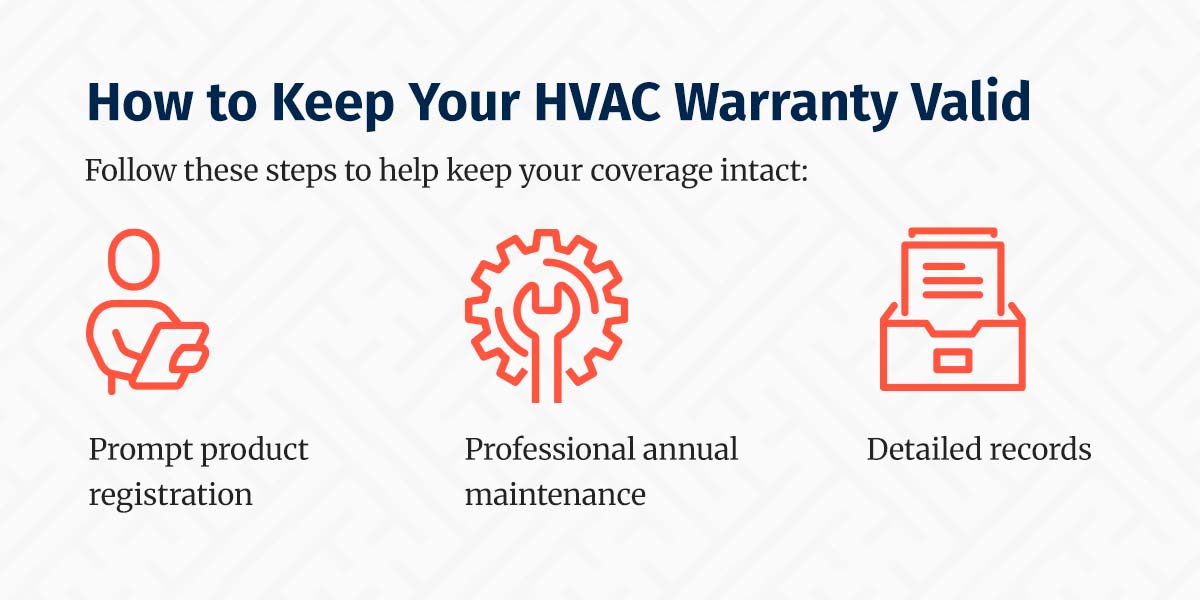
- Prompt product registration: Ask your installer if they handle registering your equipment or if you’re responsible for that. You’ll have a limited window to complete this step, typically between 60 to 90 days. Be sure to complete this registration on time.
- Professional annual maintenance: Manufacturers require proof of regular, professional service to honor a warranty claim. Have a professional inspect components, check refrigerant levels, and clean the system to prevent premature failure and keep your warranty valid.
- Detailed records: It’s always good to have records that show you’ve maintained the unit in the event of a breakdown. You can show your compliance with the warranty terms by keeping invoices, receipts, and digital copies of service reports to make your claims process smoother.
What’s the Difference Between a Home Warranty and an HVAC Warranty?
A home warranty is a separate service contract that you might purchase when buying a house. It’s designed to cover the repair and replacement of various home appliances and systems. Whether your home warranty covers HVAC repairs depends on your specific policy.
These plans operate very differently from a manufacturer’s warranty. When you file a claim with a manufacturer’s warranty, you typically get a specific replacement part engineered for your system. With a home warranty, the warranty company decides how to solve the problem. They usually choose the contractor who visits your home. Other distinctions between a home warranty and an HVAC warranty include:
- Cost vs. coverage: While a home warranty can offset costs, it usually involves a service call fee or a deductible for every visit. Some home warranty providers may deny claims if they determine you did not properly maintain the system or if the failure resulted from preexisting conditions.
- Caps and limits: Home warranties often have dollar limits per appliance. If your high-efficiency system fails, the payout might only cover a basic, entry-level replacement. A manufacturer’s warranty aims to restore your specific unit to working order.
While a home warranty can provide a safety net for older systems that are out of their manufacturer’s coverage, it’s not a direct substitute. Relying solely on a home warranty for a new system can lead to frustration regarding contractor choice and part quality.

Partner With a Professional to Protect Your Investment
Your heating and cooling system is the heart of your home. Protecting it requires a partnership with a team that understands the equipment inside and out. At Meeks Heating & Air, we can help you meet the strict maintenance requirements of your manufacturer’s warranty. Our dedicated maintenance program, Meeks Comfort Club, is designed to take the guesswork out of compliance.
When you sign up, you’ll receive the required professional attention your HVAC system needs each year. Our regular service will help keep your warranty valid and catch minor issues before they lead to a breakdown.
At Meeks Heating & Air, we offer a three-year labor warranty with any HVAC system that we install. Our customers can also extend this warranty to 10 years if desired. As a Trane Comfort Specialist, we also provide exclusive warranties and financing options. Contact us today to schedule an appointment and ensure your HVAC system is protected for the long haul.