Why Does Your HVAC System Smell Weird?
Why Does My HVAC System Smell Bad?
Common HVAC odors indicate specific problems: musty smells signal mold in ductwork or coils, burning odors suggest overheating components or electrical faults, rotten egg smells indicate dangerous gas leaks requiring immediate evacuation, and fishy smells point to melting plastic insulation. Turn off the system and call a professional for persistent odors.
Whether in the office or at home, the HVAC system is key for year-round comfort. However, weird smells filling your property can shift you from comfortable to unsettled. HVAC smells are more than just unpleasant odors taking up your space. They can be indicators of underlying issues affecting system efficiency, indoor air quality, and, in some cases, even safety.
In this guide, we will help you identify the likely causes of HVAC odors and walk you through a safe step-by-step diagnosis process so you know when to call a professional.
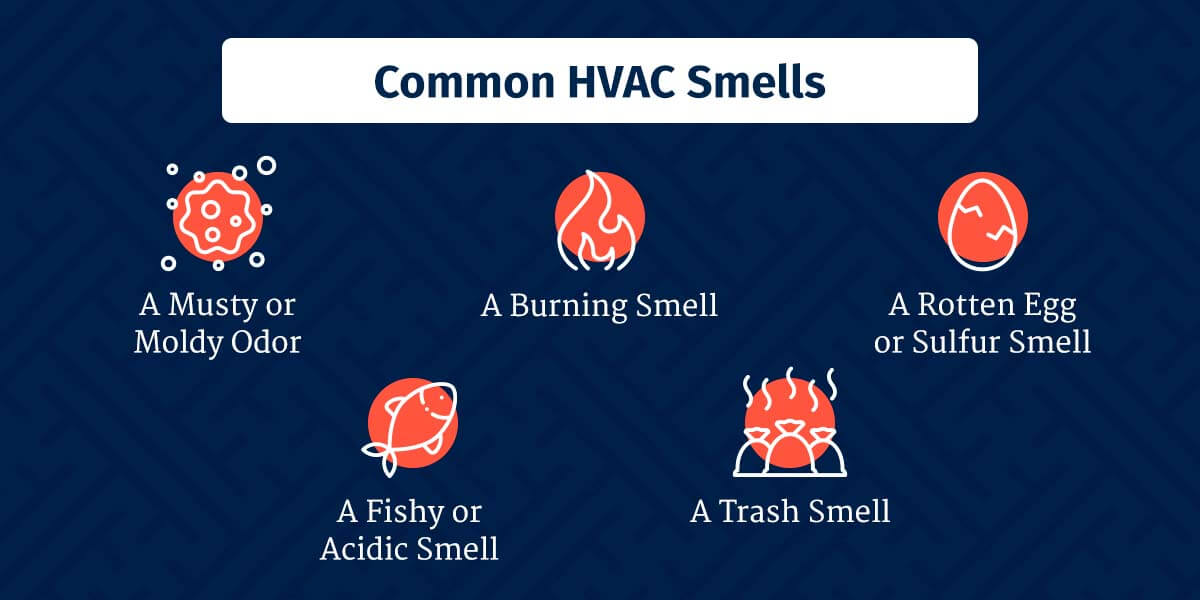
Common HVAC Smells and What They Mean
Learn about the most common HVAC smells:
A Musty or Moldy Odor
A musty HVAC smell is often a sign of mold in your unit or ductwork. Mold in nature plays a vital role in accelerating the decomposition process. However, in your home or office, it can worsen allergies and infections. When moisture builds up in the evaporator coils and combines with dust and dirt, it creates a perfect breeding ground for mold and mildew, resulting in a musty smell that resembles dirty socks, hence the popular phrase “dirty sock syndrome.”
Mold in the HVAC system is particularly common in high-humidity regions. To resolve the dirty sock syndrome, check your air filters and either wash or replace them as needed. However, if the smell persists, it’s time to consider a professional cleaning of the evaporator coils and drain pan.
A Burning Smell
There are several reasons why your HVAC may smell like burning plastic. If you’re turning your heating on for the first time in the winter, it’s normal to catch a burning smell. The smell results from dust that has settled on the heat exchanger as it heats up. This smell is usually temporary and should disappear within several minutes.
However, if you smell a sharp and acidic odor of burning plastic or melting wires, there’s a chance your system is overheating or has an electric fault. The most common diagnosis for this problem is a worn motor or a wiring problem. Regardless of the cause, turn off your system and the breaker. Contact a trained HVAC repair technician to help restore functionality and comfort to your home.
Electrical faults can be extremely dangerous. Never attempt these repairs yourself. If you see smoke, evacuate the space immediately and call the fire department.
A Rotten Egg or Sulfur Smell
If your home has a strong rotten egg smell, the problem is likely a gas leak within the HVAC system. Most gas companies mix mercaptan into natural gas, making it easier to detect a leak. Mercaptan is what lends the gas a strong rotten egg smell.
If you catch the smell in your home, don’t operate any electrical devices, switches, or anything that can create a spark. Evacuate the building immediately and call for help from a safe location. You can either call your local gas company’s emergency line or 911.
Much like an electrical issue, you can call an HVAC professional to find the leak and repair it after officials leave.
A Fishy or Acidic Smell
Another probable fire hazard indicator is a fishy odor. Note that an HVAC liquid line filter wouldn’t cause a fishy smell.
The fishy smell often results from plastic insulation on electrical components melting from overheating. The fishy or acidic smell is often an early sign of system failure. Turn off the entire HVAC system and schedule a repair service.
A Trash Smell
During the winter, small animals like rodents may seek shelter in your system, but due to harsh weather, they may not survive. The first indicator that a decomposing animal is present in your vent will be a strong, unpleasant odor that intensifies when you turn on your HVAC.
Decaying pests carry bacteria, which can be blown into your space, potentially affecting your family’s health. Call a licensed technician to help you remove the animal from your HVAC system. You can also invest in indoor air quality solutions to eliminate any microorganisms that are already present in your home, or that may be left lingering in the ventilation system.
A Homeowner’s 4-Step HVAC Odor Diagnostic
Use these four steps to determine what’s happening with your HVAC system:
- Isolate the source of the smell: Walk around your property to determine where the smell is the strongest. Do you catch the most pungent scent from the vent or the indoor unit, like the furnace or air handler? Or is the odor the strongest only when the unit is turned on?
- Perform an air filter check: Find your air filters and conduct a thorough inspection. In modern systems, you may find the filters in front of the fan, while older models have filters in the duct openings. Remember to turn your thermostat off before you start working. If you notice signs of excessive dirt and debris, it may be time to consider a replacement. Check the size of the installed filter to ensure you get the right size.
- Conduct a visual inspection: Visually inspect your unit to find possible causes of the smell. Check both the indoor and outdoor components for signs of damage. Indoors, look for visible pools of water, which is a classic telltale sign of a clogged drain line. On the outdoor unit, inspect for leaves, dirt, or vegetation that can restrict the airflow and cause the system to overheat.
- Listen for unusual sounds: Sometimes, the weird HVAC smell can be accompanied by unusual sounds. In certain cases, a burning plastic smell accompanied by a grinding sound indicates a failing motor.
When to Skip the DIY and Call a Professional
Fixing the issue on your own can be dangerous. Call an expert when:
- The smells persist even after an air filter change.
- You catch any of the smells listed above, except the short-lived burning dust smell.
- You can hear strange, loud noises coming from the system, like grinding and banging.
- The system is on, but not cooling or heating your space.
Get Expert Help From Meeks Heating & Air
Successfully diagnosing an HVAC smell can help you narrow down the possible problem with your system. However, it takes a trusted expert to help you find a definite solution that restores comfort to your space and your peace of mind.
At Meeks Heating & Air, we’re your trusted HVAC experts, with over 25 years of experience in the industry. Whether you need a motor repaired or evaporator coils cleaned, as a Trane Comfort Specialist, we have the tools and advanced training to fix the problem.
Beyond Trane, our technicians have experience repairing and maintaining a wide range of systems. You can trust us to serve your home like it is our own. Contact us today to schedule a professional inspection.